LA to PDX: The Back Way

Follow the Map | See the full photo collection

Crossing the Yuba River near the Pacific Crest Trail in Northern California.

Why don’t I just write the story? Why didn’t I just report each day’s journey? Why can’t the words come out straightforward?

I don’t even remember when I wrote this. Presumably it took shape some time in the past month, as I’ve done something akin to settling into a new home, while I’ve dragged out my move from Los Angeles to Portland, moving no longer across hundreds of miles and instead creeping slowly, randomly across my new home town.

For weeks I’ve been plotting maps, tweaking Google Earth settings, uploading and arranging photo slideshows, transcribing audio, adjusting Wordpress themes, reinstalling broken databases, sorting notes, scrawling in journals, browsing help forums, maintaining computer files, arranging furniture, pitching stories, visiting labs, reporting, attending meetings, filing emails, postponing responses, mailing postcards, paying bills, signing leases, opening boxes and otherwise transitioning through life, both digesting and avoiding my recollection of my journey from Los Angeles to Portland.

It has been a mixed blessing. Sometimes I kick myself for not writing enough, not writing when the trip was fresh, not writing soon enough, early enough. Other times I realize something that K.C. Cole told my class of science writers at USC on more than one occasion, something I found incredibly encouraging. “Even when you’re not writing,” she’d say, “You’re writing.”

I wonder what I’ve written as I’ve not been writing, and as I’ve fretted each day about losing the memories that so recently burned themselves into me, that brought me, simply, from there to here. I don’t want to wonder about it too much, though, lest I get caught up in the pointless tedium of writing and reading about writing.

What I can recall distinctly is a sentiment I felt somewhere between Lassen and Modoc counties, when I emerged from a forest to see sunlight like I’d never seen before swirling across the tree tops. Then, I uttered the following into the digital voice recorder I babbled at throughout my journey:

I don’t know how quite to describe what I’m seeing and what I’m passing through and how to record it for permanence. I don’t know quite how to capture the sense of the sun on the line of trees up high with the trees still in shadow beneath, the changing landscape from thick fog and patches of snow to only small patches of snow and these, what I think are lava beds, pouring over the side now in a landscape becoming more rough bit by bit. I don’t know how to keep describing everything that I’m seeing, the complete emptiness of it all, the complete soloness of my drive at this moment.

I guess what I’ve written is what you see here. What I’ve produced is what you’ve found. What I’ve created is in front of you and, quite possibly, it is changing just as quickly, just as astoundingly as the light shifting and scattering and spreading across those treetops in a faraway corner of California.

Continue reading “LAX to PDX: The Back Way”

Writing (and driving) gone wild

Transitory nature | What you may read | Join the journey

OLYMPUS DIGITAL CAMERA Today I leave Los Angeles for Portland, Oregon.

As I do, I look forward to taking an as-yet determined path to my new home hundreds of miles north.

I don’t know how exactly I’ll get to Portland, though I’ve set a few ground rules. I won’t set a firm date to get there. Though the trip could easily take as little as a day and a half, I don’t want to constrain myself to any schedule, lest I miss the world I pass through (you can help me get there, too). I may backtrack. I may make detours. I may decide to linger in one spot staring at the sky for hours. I may rush. I may wander.

Which brings me to rule #2, perhaps the most exciting and most questionable part of my plans. To best experience the journey I plan to completely avoid freeways and even divided highways. Getting to Oregon from Southern California in January makes this a rather daunting task, particularly because I also plan to steer clear of the coast. As stunning as the coast is, I’ve seen much of it and hunger for a new path, at least this time around.

Instead, after a brief visit to Ventura, I might start crossing the mountains of the Los Padres Forest along Highway 33 or perhaps head east to U.S. 395, the Eastern Sierras, and a detour through Nevada. It’s likely I’ll have to ditch certain highways for local roads as some stretches, like the 33 in Ventura, become highways. Perhaps I’ll find myself crisscrossing farmland on country roads in the San Joaquin Valley. Most certainly I’ll travel along dozens of unknown roads upon which I’ve yet to decide. I may very likely encounter snowy passes, and, though I have chains, I don’t intend to be stupid and may have to make a number of adjustments to the paths I set (I won’t, however, bring a GPS because I treasure my sense of direction and my ability to read a map).

Continue reading “Writing (and driving) gone wild”

R We There Yet? Re-evaluating Los Angeles's Transit Future

Gold line conductor's view “Out of service,” the driver tells me as I step on the #4 in Downtown Los Angeles.

It is nearly 3 a.m. and Broadway’s indoor swap meets, electronic stores and jewelry shops sit darkened behind me. Shadowed by the marquee of an ancient movie house my face betrays concern, perhaps even desperation. I’ve waited to catch a bus for nearly an hour alongside the vacant thoroughfare after staying out with a friend and missing the night’s last Red Line subway. It’s cold. The bus already carries about a dozen riders, so I don’t understand why the driver seems to be telling me I can’t board. Not wanting to linger on the street much longer, I pause on the bus’s steps.

“Out of service,” the driver repeats. I step back down to the sidewalk. She laughs, smiles, and rolls her eyes.

Read More

A story still in transit

A story still in transit

Though much has happened in Los Angeles’ transportation scene since this story was completed last Spring, the central challenges discussed here largely remain the same. Some light edits have been made to the text to reflect some of the changes. More developments include the following: The California Transit Association and allies in local government won a lawsuit against the state’s raids on local transit dollars, though what that means for transit agencies statewide remains murky; Metro hired a New CEO in Art Leahy and opened its Gold Line light extension to East L.A; Metro also released its timetables to Google, allowing travelers to plan trips using transit instead of by car or foot using Google Maps.

Does L.A. Really Love its Cars?

Does LA really love its cars?

Any great city exists amidst a great mythology. Los Angeles, so the tale goes, became the place it is today in a post-war economic boom. As the Cold War fueled a booming aerospace industry, the city grew to become the quilt of suburbia and highways it’s now readily dismissed as. One of the nation’s first freeways, the Pasadena Freeway, was built between L.A. and Pasadena even before World War II. The automobile quickly became a staple of the American dream and the Southern California ethos.

Simultaneous with the auto’s rise, a once robust railcar network known as the Pacific Electric collapsed. Cynics alleged collusion between the oil and automobile industries for ushering in its demise, but court cases making those allegations failed. A more likely explanation: legislative decisions encouraged by a public enamored with the new-found freedom that car ownership brought made the streetcars economically unfeasible.

Another myth: Angelenos love their cars. In fact, The city isn’t the nation’s most car dependent. Residents of four other metropolitan areas drive more miles each day than people in the greater Los Angeles area, according to data from the Texas Transportation Institute. Los Angeles is also fifth in average automobile ownership per household — even residents of eco-minded cities like San Francisco and Seattle own more cars per capita. When it comes to drivers isolating themselves in their cars, Los Angeles ranks ninth in the percentage of employees who drive alone to work.

The same statistics also describe just how extensive the region’s transit network is. Only the New York City area offers more total bus service miles, for example, and Los Angeles still has the most bus-service miles per square mile covered. Los Angeles even ranks in the middle of the pack when it comes to measurements of its rail-based transit (a measurement that combines light rails, subways and commuter rails such as the region’s Metrolink system).

Transportation Terminology

Transportation Terminology

A train is a train and a bus is a bus, right? Not exactly. All the different forms of mass transit can get confusing. When planners discuss transportation, they’re not just discussing whether commuters are carried on wheels or along rails. Each form of transit has champions in Los Angeles and elsewhere. Here are some brief descriptions of the different forms of transportation scholars and policymakers are currently discussing to keep track of the possibilities for Los Angeles.

Heavy Rail: Electric-powered trains carrying multiple cars capable of transporting large numbers of passengers at high speeds along rails separated from foot and automobile traffic. The Red and Purple Line subways are Los Angeles’ only heavy rail mass transit.

Light Rail: While some light rails — such as portions of the Blue Line and the new Gold Line Eastside Extension — can have underground portions, light rail generally travels above ground and is differentiated from heavy rail by short trains (usually electric powered) on fixed railways not separated from street traffic and pedestrians. Trolleys, trams and streetcars are some examples. In L.A., the best examples are the Gold Line, the Blue Line, the Green Line, and the currently under construction Expo Line.

Commuter Rail: Regularly operating railroads with trains powered either by diesel or electricity and connecting job centers and urban cores with suburban communities. Los Angeles’ metropolitan area is served by Metrolink, a service run by five county transportation agencies throughout the region. Tragically, the system received nationwide attention in September, 2008, when a Metrolink train collided with a freight train outside of the Chatsworth suburb of Los Angeles. More than 25 people commuting between Los Angeles and Ventura Counties died in the accident.

Bus Rapid Transit: Los Angeles’ popular Orange Line service in the San Fernando Valley is an example of bus rapid transit. This type of transit uses buses (powered by various fuel sources such as compressed natural gas, diesel, hybrid battery technologies) on specialized roadways or lanes dedicated to the buses. The systems can be integrated to deal with local conditions. In the Orange Line’s case, this meant converting an out of service rail right-of-way to carry the line’s buses. Metro also calls its new Silver Line, a consolidation of conventional bus routes using bus-only lanes, BRT as well.

Sources:

American Public Transportation Association

National Bus Rapid Transit Institute

Metrolink

Los Angeles Metropolitan Transportation Authority (Metro)

“I didn’t say you can’t get on,” she teases, as if she’s going to finish the sentence with “rookie.”

It’s the farebox that’s “Out of Service.” I jump back onto the bus and find a seat along the center of the bus, where its two sections connect like an accordion. None of the other riders pay me any heed. Each haggard face exudes fatigue. Two women, both dressed in identical white pants and white sweatshirts, sleep leaning against one another. Perhaps a mother and daughter, perhaps middle-aged sisters, one rests her shoulder on the other, who is slumped against a rattling window. Their long brown hair tangles together.

It’s becoming clear that the age of the automobile is coming to an end, or, at the very least, changing. Los Angeles, like other cities, loses billions of dollars each year just because of people stuck on the region’s tangled roadways. Scholars, politicians, activists and numerous overlapping government agencies each offer often-competing solutions for how to get the region moving. All the while, the solution might begin not with expensive upheavals and construction of vast new transit networks, but instead with better cooperation, education and mobilization of the surprisingly robust transit network that already exists in the metropolis.

What’s certain: voters in Los Angeles County are fed up with traffic. Confounding expectations, they accomplished an extraordinary feat in November, 2008 and gambled that an investment in the region’s transportation network would pay lasting dividends. Despite an economic downturn, more than two-thirds of them chose to tax themselves to pay for Measure R, a $40 billion expansion of the region's transit system. Since July 1, the county has collected a half-cent sales tax to pay for new rail lines, expanded bus routes, and improvements to existing infrastructure. But a debilitating state budget battle earlier this year put transit in a precarious position across California, including Los Angeles, whose position among the world’s great cities could be at risk.

“We’re going to fight tooth and nail for every penny from the state,” Richard Katz said in January. Katz sits on the governing board of the Los Angeles County Metropolitan Transportation Authority, Metro, by far the largest transit agency in the region. A former state assemblyman, Katz was appointed to the board by Los Angeles Mayor Antonio Villaraigosa and was a key architect of Measure R. “I think we make a mistake if we don’t recognize that the voters made a clear choice in November. They said transportation is the number one issue in the county. We’re going to give you the resources to fix it and we expect you to fix it. They don’t expect us to be whining about losing $200 million a year.”

As the #4 bus carries me past Union Station it turns westward on Cesar Chavez Avenue. I notice how the prerecorded voice announcing each stop perfectly pronounces the deceased farm labor organizer’s name. A few blocks away, after Cesar Chavez Avenue becomes Sunset Boulevard, the recording stumbles over a cross-street’s name, uttering Micheltorena like a Gringo. The sleeping sisters are oblivious to their surroundings, until a few blocks later, when the bus stops at Sunset and Alvarado. Two middle-aged men drunkenly babble to one another as they board. They stumble in search of a seat, startling the women.

The bus turns down Santa Monica Boulevard. I disembark at Vermont Avenue, where I can connect with the #204, a North-South line with a stop a block from my apartment. A light drizzle falls as I wait in the dark along Vermont. A dozen or so men line the curb, peering north up the street. A few step into the road. If only they could spy the bus, it seems, they could will it to carry us out of this uneasy wait sooner. It’s about 3:30 a.m. The only passing cars are taxis hoping to pick up a few desperate fares. The drunks who earlier boarded the #4 stand next to me, talking about the relative morality of stealing bicycles versus cars and beds. They reminisce on times they’ve had to pull guns, what it felt like with the finger on the trigger and the experience of staring down the barrel of a friend’s firearm. Illustrating one such experience one of the men mimes a pistol with his fingers outstretched.

“Those days are gone,” he says.

Continue reading “R We There Yet? Re-evaluating Los Angeles’s Transit Future”

Pages: 1 2 3 4

Making the most of making the media

Finding Community | Stopping to Breathe | False divisions | Continuing the discussion | Other Voices

I arrived in Los Angeles late Monday afternoon. As I landed, I watched the sunset turn the Santa Monica Mountains that golden hue they turn in late fall, caught glimpses of the skyscrapers along Wilshire Blvd., marveled at the sheer everywhereness of it all and traced a line from the Hollywood sign down to the corner of Hollywood and Vine, where, nearly a century ago, my great-great-grandfather’s decision to rent a barn on his sprawling ranch to two young filmmakers for $250 a month might have made much of the city’s role as a media mecca possible. The tableau pulled at my heart, one more landing in a city I’ve called home for only a year, but which has been in my blood for five generations.

For years, though, as I hinted in a post last Spring, I’ve danced with another city. Over the past week, the motions became more certain, thanks in part to the energy I tapped into at the We Make the Media Conference at the University of Oregon’s Turnbull Portland Center.

Thoughts about the future raced through my mind as my plane descended. Some of these thoughts are familiar to the world at large. Some are personal. When it comes to Saturday’s conference, I’ve had to take some time to digest, get back home, and prepare my next steps. They include returning to Portland very soon — and more permanently — in part to join the community of mediamakers who emerged at the conference.

Continue reading “Making the most of making the media”

Blurring the lines: Virtual human research promises real-world impacts

Halfway through my interview with Louis-Philippe Morency I suddenly felt incredibly self-conscious.

Every nod, every movement of pen to paper, every glance in his eyes made me wonder what I might have been saying without saying anything. Would he catch my eyes straying to his bookshelves or the traffic on the street below and notice my (rare) moments of boredom and feel insulted? Would he detect a hurried, enthusiastic nod and hammer a point home to me? Would he latch onto my fascination to try to spin me?

Nonverbal cues drive human conversation. They signal a speaker to come to a point with an expectant glance or urge a listener to grasp the significance of a message with a well-timed raise of the eyebrows. Beneath the surface of our words we steep our conversations in texture and fill our discussions with broader meaning when we move our hands to the rhythm of our voices, shift our weight nervously, affix our gaze on listeners and alter the pitch of our voice with excitement or trepidation. These “backchannels” direct the flow of social interactions, but they aren’t universal.

Morency completed his Ph. D. at the Massachusetts Institute of Technology and joined a team at the University of Southern California’s Institute for Creative Technology studying how virtual humans — artificially created but independent characters residing in a computer environment and meant to look, move, behave and communicate like real humans — can be taught to interact more plausibly with real humans and even each other using both vocal language and these nonverbal backchannels. Since coming on board at ICT Morency — along with colleagues at ICT — has won a series of awards and other recognition for research in how computers make sense of the visual data they collect.

Backchannels evolve through time, and they are differentiated by culture. They frame our words. But while these backchannels come to us almost as easily as breathing and are as much a product of thousands of years of history as art and music and religion, they’re foreign to computers. Scientists could program the whole of the Oxford English Dictionary and countless combinations of “heuristics” — or problem solving formulas — for proper grammar and machines would still have trouble learning this natural language.

The notion that virtual humans might have unscripted conversations with humans and one another may seem like science fiction. Real humans themselves often struggle to communicate with one another; whether we’re participating in complex international negotiations or wooing a mate we weave a quilt of words and body language meant to express our needs and desires. Computers communicate in strings of ones and zeros, a vocabulary of closed and open circuits determining how they “decide” to run programs. They have no other culture, no thousands of years of history to determine their identity.

Continue reading “Blurring the lines: Virtual human research promises real-world impacts”

Koreatown's sign language

This afternoon I ran an errand a couple Purple line stops away. It was such a beautiful day that instead of taking the subway I decided to meander home on foot. Fortunately, before I left the house I thought to grab my camera. I took the opportunity to look around a bit and capture some of my favorite signage and guerrila art in Koreatown. Note Kim Jong-Il’s appearances. Guess at which point my sense of humor turned a little juvenile. Also, pay close attention to the heart on the banner outside Mr. Pizza Factory, where, apparently the choices among the pies include beef, fish, chicken and “love for women.”

Click on the thumbnails for a peek at what I saw.

The eyesore, history and the untold story

The Ventura County Star reported Oct. 30 that Ventura County Superior Court Judge Glen Reiser halted the demoliton of the Wagon Wheel hotel. The stay came after what seemed like the end of a long fight between developer Vince Daly and the San Buenaventura Conservancy.

Many comments posted to the Star’s Web site featured the theme of the Wagon Wheel as an eyesore, a blemish to the entrance of Oxnard, Ventura County’s largest city. The building and its surroundings, they argue, should have been torn down long ago. Some commenters argue the conservancy should repay Daly for the costs of the delay, costs he claims mount by the thousands each day the construction is delayed. For his own part, Daly argues in the Star article that blocking the demolition permit further delays construction of the affordable housing element of his development. On the other hand, neither Star reporter Scott Hadly, his sources on either side of the story, nor any of the commenters pouncing on the article address one crucial question: why is Daly building this project now? Why is it so urgent?

Drive across the 101 from the Wagon Wheel, located here and one finds the massive development known as RiverPark. On the north side of the freeway, just outside of that development, stands a billboard declaring homes starting from “the 200s.” That simple advertisement, that homes in RiverPark are selling for only 200 grand, tells the entire story. Homes aren’t selling in Ventura County. Even with reports Oct. 29 of an unofficial end ot the “worst recession since World War II,” our economy is sputtering. Should Daly, or anyone, be building new homes right now?

Let’s argue for a moment that he should, that he has a right to, or that, simply, as the owner of the property upon which the Wagon Wheel Motel stands he should be allowed to finish the project he’s started. Does that mean A)It’s right if he does so or B)It’s wise if he does? Daly seems to be gambling that by the time the project is completed we will be out of this gut-wrenching time, that consumers are going to return to the table unaffected by the misery of the past two years, give or take a quarter, that every American is going to want a condo or a townhouse across a freeway offramp from a cookie cutter mini-mall and down the block from a thousand other condos and townhouses just like their very own (though the possibility of a “transit center” at The Village raises some intriguing possibilities).

Are we so sure of that? Are we so sure that our behaviors are not going to change after this recession, that we’re not going to think strategically, that we’re not going to act differently, that we’re not going to operate differently? Even if we get ourselves into some other economic mess — which is quite likely — some lessons, even if they’re not the right ones, have surely been learned during this period.

Besides the possibility Daly is hoping for a boom by the time The Village is done, another reason one might want to see it started immediately directly relates to the current economy. Perhaps, one might argue, every day we hesitate to build is a day we cost ourselves valuable construction jobs, jobs that could earn money to feed families, jobs that could pay residents money they can use to spend on clothes and food and cars and gadgets and all the other everythings sold in the county’s stores.  Aren’t we, by blocking those jobs, which provide that income, which allows that spending also preventing the economic growth that comes from that spending, preventing the jobs created by that growth, and preventing the income those jobs allow?

Perhaps.

What are we really protecting? We have a great deal of unsold housing stock. Oxnard has buildings that already exist. Ventura County has miles upon miles of substandard homes and poorly utilized space. What if we spent the same time, the same money, the same energy and investment and subsidies we would put into new projects on instead reconstructing the cities and communities and neighborhoods that already exist. What if we brought our county, and our country, back to life? We might accomplish multiple goals. We would still put our contractors and construction crews and architects and plumbers and electricians and welders back to work, but we would do so without turning our backs on our neighbors and on our past. We could engage our community. What if we integrated our history into our past, instead of throwing it out? What if, instead, we learned to reuse the materials that already exist across Ventura County and beyond, to really recycle the world in which we live, rather than throw it out like the 4.5 pounds of trash we still throw away each and every day?

Continue reading “The eyesore, history and the untold story”

Repurposed

What are you doing this Saturday?

Perhaps you’re taking a stand to help slow climate change by participating in one of more than 4,000 actions in 170 countries being organized by 350.org. The number, as the organization will tell you, represents the parts per million of carbon dioxide thought to be the upper limit for avoiding runaway climate change (we are currently at 387 parts per million).

You can come to your own conclusions about whether or not to join these actions. As a journalist, perhaps I shouldn’t attempt to sway you to action. However, it is also my responsibility to describe the world in which we live, to clearly present information and to sort through the distractions – both unintended and intended – that obscure the truth.

As my career has evolved, I have found myself increasingly drawn to exploring how society copes with the possibility of a changing environment from a political, scientific, sociological and cultural perspective. Many facets of contemporary life have an environmental component, including politics, the economy, culture and technology.

Much is made about the emergence of green technologies and there are great business stories to pursue revolving around sustainability, but there is so much more. Voters are making green issues a higher priority, cities are incorporating environmental standards and requirements in planning decisions, romantic partners are choosing to hold carbon-neutral weddings and environmental litigation and prosecutions are keeping many lawyers, and law enforcement personnel, busy.

There are many questions to be answered about the intersections of the environment and society. How do we as a society cope with the possibility of a changing climate and shifting availability of resources? How do environmental transitions affect society, politics, family and personal relationships? How do they affect our mythology and our beliefs? Humans tend to progress in crisis, or to change, to be at their best, and I would like to observe and document society’s reaction to environmental shifts. How does a slow-moving crisis affect human behavior?

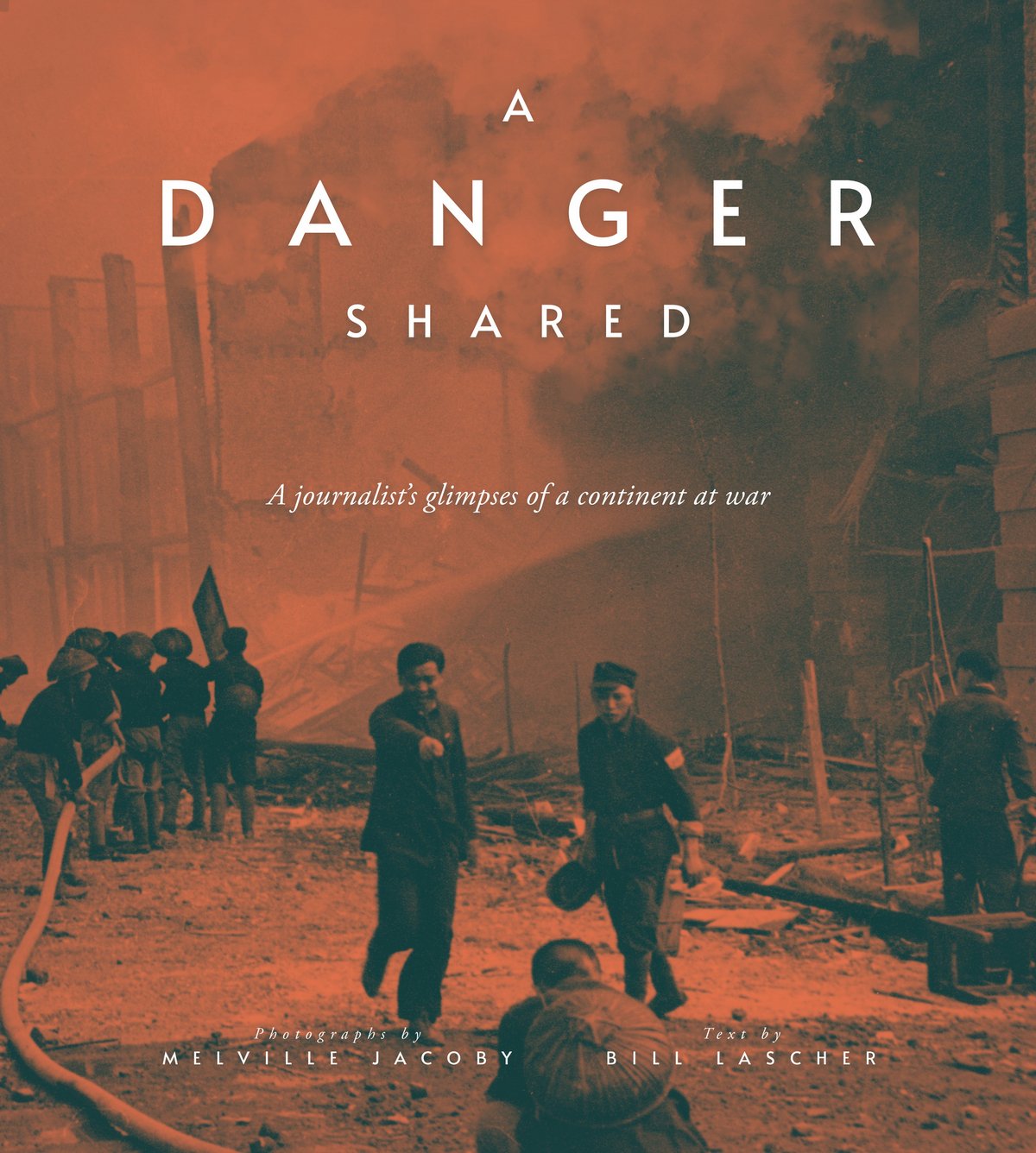
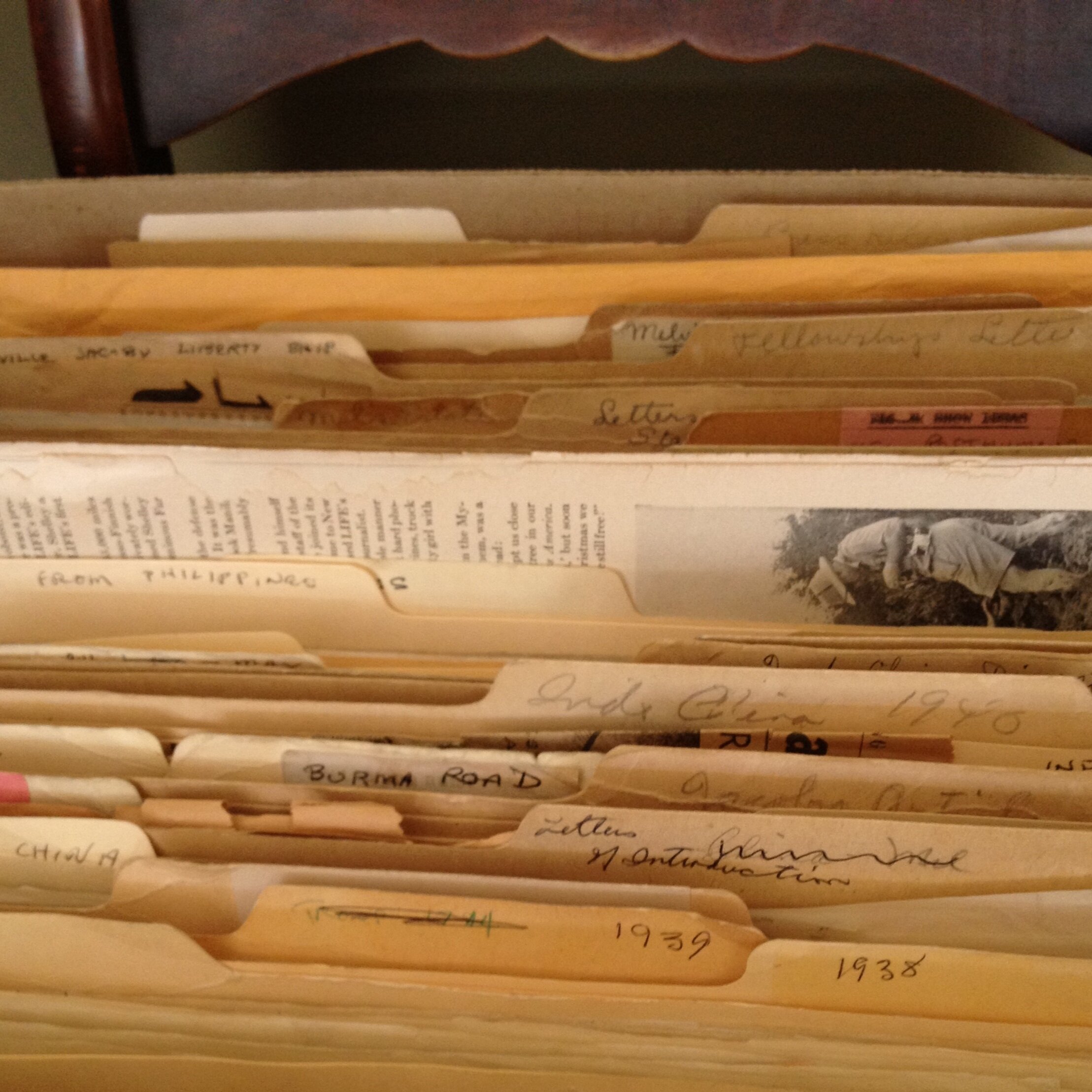
In recent years I’ve had discussions with my grandmother about her cousin, the journalist Melville Jacoby. Melville served as a correspondent in China and Southeast Asia in the 1930s and early 40s, eventually penning articles for outlets such as Time, Life and the United Press Syndicate at the onset of World War II. Melville was my age at the time — younger actually — yet he was so deeply immersed he reported from the midst of a narrow escape from the Philippines after the Japanese invasion and, earlier during his travels through China, became close to Chiang Kai-Shek. Killed at 25 in an accident in Australia in 1942, he left behind rich accounts of his life in the form of letters, dispatches and photos now in my grandmother’s possession.

In exploring these accounts, I realize Melville played a central role telling stories about one small part of another great, global crisis. Perhaps the war was more romantic than the environmental movement’s seemingly glacial pace, but both crises are the defining milieus of a particular generation. Like Melville, I want to chronicle my generation’s response to its crisis.

Continue reading “A life, a career, a world repurposed”

What it's like - In Transit in L.A.

A brief note: if you haven’t looked around the site lately please take some time to look at my updated, categorized portfolio page. More updates to come soon.

[SinglePic not found]After an evening in Pasadena I board the Gold line at Fillmore Station. I complete a phone call as the train heads southwest, away from the San Gabriel Valley toward Downtown Los Angeles.

As we stop at the Lincoln Heights/Cypress Park station I see the lights of thousands of East L.A. homes twinkling out the window beside me, as if Christmas had lingered a little into the New Year. A green half moon hangs heavily in the sky above the 10, so close to the ground it seems one could reach it by car. A minute or two later I look out the opposite window of the narrow train to see the blue and red neon outline of pagodas marking the next neighborhood Iwill travel through.

“Approaching Chinatown Station,” a man’s recorded voice announces, the volume on the car’s speakers too loud for the last train of a midweek evening. Riders hold their ears and momentarily interrupt phone calls. In one corner, a woman, who for the past three stops bobbed between slumber and what seems a trance-like state jolts awake, her hands grasping the white, curved handlebars of the bike she has propped in front of her.

In the same moment a wave of familiarity washes over me here alongside the L.A. River. As the street lamps and billboards and taillights fade into the darkness I slip away from the Los Angeles I know, jostled into a new awareness by the thought of the path I am threading through the urban fabric.

I find myself all over the world. Now I am headed toward downtown Portland, Maine aboard the #6 bus, gazing at the B&M Baked Beans factory standing starkly against the gray skies and grayer waters of the Casco Bay. A moment later I find myself on Portland Oregon’s MAX, where I see a net of concrete and steel and iron bridges crossing the same Willamette River I ride above. Then my thoughts shift and I cross the Rhine, I cross borders and history on the bus from France’s Strasbourg to Germany’s Kehl to buy Turkish Doner Kebab and American peanut butter. I find myself back in Strasbourg, listening to Tunisians and Moroccans joking in the center of Le Tram, the wide steel tube they ride day and night from the banlieues of Meinau and Neudorf and Elsau toward the broad Place Kleber at Strasbourg’s heart.

Familiar memories vector across my neural network, stitched together to form my life, as has begun to happen here, where I left my car at home, here, in L.A., the supposed Eden of automobiles. Red Line Departing Wilshire/Vermont

I reach my destination, spill out of the train and linger in Union Station as I finish my phone call. This night the station is falling asleep, like the quarter-dozen overladen travelers waiting for the late night bus to Bakersfield. Janitors mop the day away between the old tan leather and wood chairs, the solid, welcoming remnants of a grand past.

Just yesterday I lingered on one of these chairs watching dust dance through streams of sunlight. I gnoshed on a messy bagel sandwich as I processed a Metro committee meeting I had just visited.

There, Metro board members brimmed with impatience and frustration, frustration that grand plans to clear the stifled circulatory system of this creature sprawled across hills and valleys and long forgotten scrubland. As I watched the workday wander by, the wide-eyed midwestern families, the men in suits, the women in silk blouses and heels, the tired college students, even the silent, red-faced man who furiously stuck a flier about aliens in my face or the young Asian-American movie star surreptitiously posing for a magazine photo shoot I thought I felt a pulse. A light shudder here, a straining beat there as I watched the station catch its rhythm.

“I’m here,” I tell the woman I’m speaking to on the phone. I grope for change in my pockets and descend beneath a sign reading “Metro Red Line.”

“I have to get on the train now.”


Los Angeles in Your Eyes

                               What is Los Angeles?

How do you answer that question? Unlike perhaps any city in the United States, Los Angeles is definitionless. Some might even apply Gertrude Stein’s famous statement about Oakland, that “there is no there, there,” to Los Angeles.

What I find so interesting though, is that there are, in fact, so, so many here’s, here. My question for readers: How do you share these here’s with others? How do you define Los Angeles for visitors, for out of town family, for distant friends?

I’ve been wondering this for months. If a friend were to visit from out of town, what kind of tour would I give her or him, especially if we only had a short time to explore?

Northwestern Inspiration

Please excuse a touch of digressive background before my call for L.A. tour ideas (but click here if you’re impatient). Though I’ve been thinking about this post for a long time,  a recent trip to the Pacific Northwest finally inspired its composition. Though astute readers of Lascher at Large know my feelings about Portland — feelings only reinforced this last visit — they might not know this was my first trip to Seattle. As a vacation it was wonderful. My traveling companion and I rode the train to the Emerald City and explored with little rhyme or reason and scant attention paid to time’s constraints.

Instead, we experienced the city on our own terms, at our own pace. We had a late breakfast in Queen Anne. We lingered in the splendid Olympic Sculpture Park and loved it so much we happily returned the next day at the end of a stroll through the pouring rain. We sampled salted caramels beloved by Barack Obama and eschewed overpriced omelettes in favor of straightforward but unbelievable fish and chips and chowder from Jack’s during our breakfast visit to the Pike’s Place Public Market. Some friends scooped us up and enlisted us in a trivia challenge over beer in Wedgwood (We can proudly boast we helped our friends to victory and a free pitcher for their next visit). We strolled down Pike Street From Capitol Hill to Downtown, dodging gamers attending Pax as we chowed on streetside crepes (food played a major role in this vacation, as it should in any) before stopping for fantastic martinis at an eclectic Downtown bar and grill.

My point here, though, isn’t to recount every minute of our weekend. Instead, it’s to note how subconsciously we took Seattle in. Though we know we didn’t see nearly the entire place, I think we can both agree the sheer bliss of wandering semi-aimlessly delivered a sense of the town’s rhythm.

Could a visitor have a similar experience in Los Angeles? Certainly, its sheer size might inhibit a weekend visitor from ever knowing this place. Then again, what if a visitor to Los Angeles accepted that they weren’t going to see it all, that they never could, that even those of us who live here will never fully understand this place? What if they just let go and enjoyed seeing what they could see?

Continue reading “Los Angeles in Your Eyes”